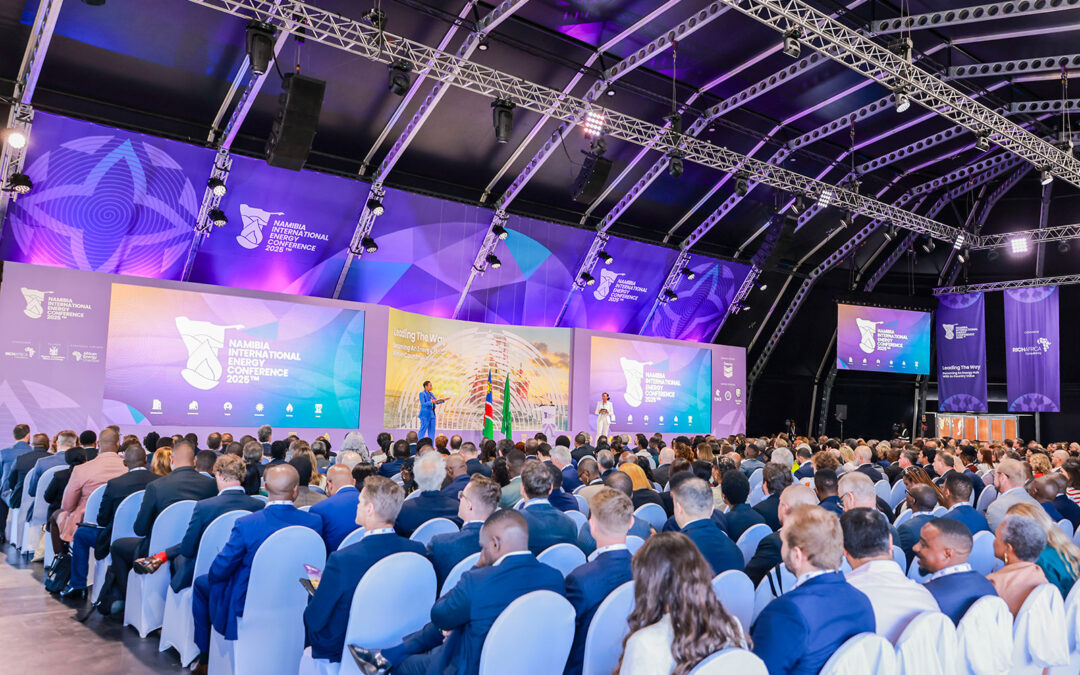
As Namibia advances toward commercialising its massive offshore petroleum discoveries, the upcoming Namibia Oil and Gas Conference and Exhibition (NOGC 2026) is pivoting from policy dialogue to practical deal-making, with a sharp focus on integrating regional markets like landlocked Zambia into its emerging energy supply chain.
Scheduled for Aug. 18–20 in Windhoek, the gathering of 2,000 government officials, international operators, financiers, and local suppliers arrives at a pivotal juncture for Southern Africa. With Namibia’s Orange Basin discoveries positioning the country as a future regional energy heavyweight, neighboring economies—most prominently Zambia—are maneuvering to secure long-term energy access, transit infrastructure, and cross-border commercial partnerships.
The event, held under the theme “From Decision to Dividend: Making Namibia’s Oil Work for Namibians,” is placing cross-border commercial alignment alongside domestic local content. For landlocked neighbors like Zambia, which have actively pursued regional supply diversification and pipeline partnerships to cushion against global market volatility, the summit provides a crucial platform to forge trade links across the upstream and midstream value chains.
Hosted by the Economic Association of Namibia (EAN) alongside the Namibia Investment Promotion and Development Board (NIPDB) and the Hanns Seidel Foundation—with state oil firm NAMCOR, SNC Incorporated, and Rhino Resources as strategic partners—the conference has been structured to deliver immediate transaction flow.
“Expect a marketplace, not a talk shop,” said Jason Kasuto, Chairperson of NOGC 2026. “For investors, it is access to a stable frontier and credible local partners. For operators and service providers, a stronger, better-understood supply base. For local businesses, the chance to leave with a contract, a partner or a benchmark.”
Central to the agenda is the NIPDB Local Content Pitching Session, where 15 selected regional enterprises and suppliers will present five-minute capabilities pitches directly to international engineering, procurement, and construction (EPC) contractors and Tier 1 industry leaders.
For regional stakeholders, particularly Zambian logistics, servicing, and trade firms seeking integration into the Atlantic energy corridor, the summit offers direct access to key procurement decision-makers.
“The Local Content Pitching Session was established to translate Namibia’s local-content aspirations into practical business opportunities,” said Chemell Plaatjies, lead for Local Supplier Pitching at the NIPDB. “By connecting suppliers with operators, EPC contractors, Tier 1 suppliers and other stakeholders, the session creates pathways to partnerships and future procurement opportunities across the upstream value chain.”
The executive sessions on Aug. 19–20 will tackle offshore field economics, project finance, midstream logistics, and critical infrastructure required to establish a sustainable regional energy mix. Discussions will explicitly address gas commercialization and transit corridors essential for delivering energy security to landlocked trading partners across the Southern African Development Community (SADC).
NAMCOR Communications Director Paulo Coelho emphasized that long-term regional stability depends on building cross-border institutional capacity that endures beyond single extraction projects.
“Successful partnerships must go beyond transactions,” Coelho said. “They should build lasting local capacity, strengthen institutions and create enterprises that remain competitive beyond a single petroleum project.”
Running parallel to executive panels, the Namibia Oil and Gas Technical Conference will cover subsurface geology, field development, and environmental management, while a dedicated Future Generations Programme will focus on technical training and workforce development to ensure regional youth absorb the economic tailwinds of Southern Africa’s expanding oil frontier.