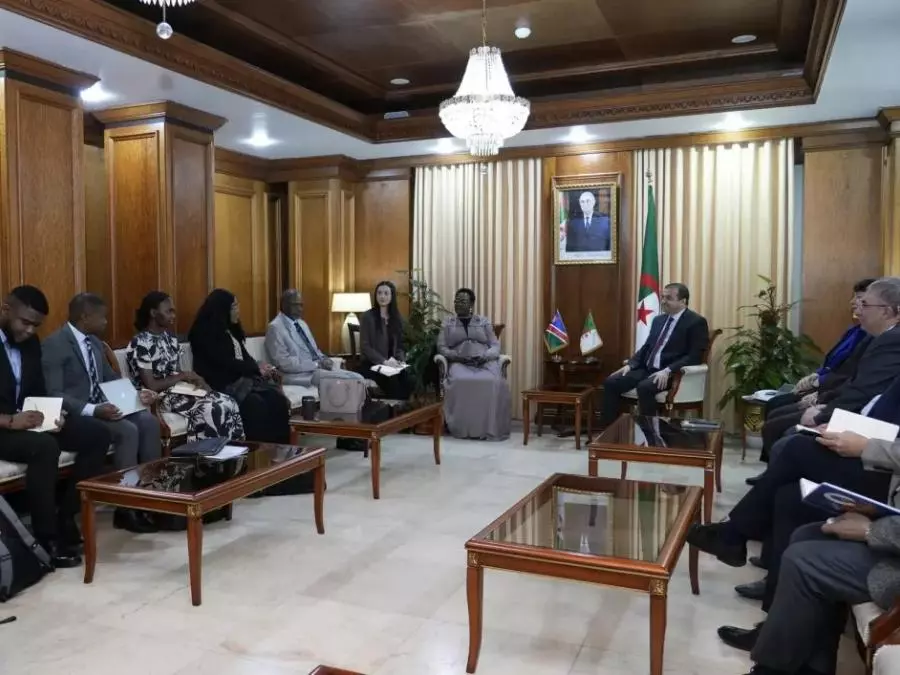
ALGIERS – In a significant move toward African economic integration, Algeria and Namibia have signaled a deepening of bilateral energy ties following high-level talks between the Algerian Minister of State for Hydrocarbons and Mines, Mohamed Arkab, and Kornelia Shilunga, Special Advisor to the President of Namibia. The meeting, held at the ministry’s headquarters in Algiers, marks a concerted effort to export Algeria’s decades of oil and gas expertise to Namibia’s burgeoning upstream sector, which has recently seen a string of massive offshore discoveries.
The discussions focused on a comprehensive overhaul of the energy value chain, spanning from initial exploration and production to the complex processes of refining, liquefaction, and gas transport. By leveraging the state-owned giant Sonatrach, Algeria aims to establish a robust footprint in the Southern African market, providing Namibia with the technical scaffolding required to manage its newfound hydrocarbon wealth. This partnership is viewed as a cornerstone of President Abdelmadjid Tebboune’s regional development mandate, which prioritizes South-South cooperation as a buffer against global market volatility.
“Both parties hailed the quality of relations uniting the two countries, while reaffirming their common will to raise them to the level of a partnership based on concrete projects and executive action programs,” the ministry stated following the conclusion of the talks. This commitment extends beyond infrastructure to include the “soft” assets of the industry, such as legislative frameworks, regulatory management, and the optimization of public revenues through modernized fiscal regimes.
A primary pillar of this cooperation involves human capital development, with Algeria offering to train Namibian technicians and engineers through its specialized institutes, most notably the Algerian Petroleum Institute (IAP). This educational exchange is designed to ensure that Namibia’s energy transition is led by a skilled domestic workforce. Ms. Shilunga characterized the Algerian model of hydrocarbon management as exemplary, expressing a keen interest in adopting Algerian technical assistance mechanisms and economic models to support Namibia’s national economy.
The two nations have agreed to set up operational mechanisms to fast-track these cooperation axes, which will include field visits to major Algerian energy sites and the finalization of technical assistance protocols. As Namibia prepares to become a significant global player in the oil and gas space, its alignment with Algeria’s established upstream and downstream capabilities underscores a broader trend of intra-African collaboration. For the Business Times reader, this alliance represents a strategic pivot toward continental self-reliance in the energy sector, potentially reshaping the flow of technical expertise across Africa.