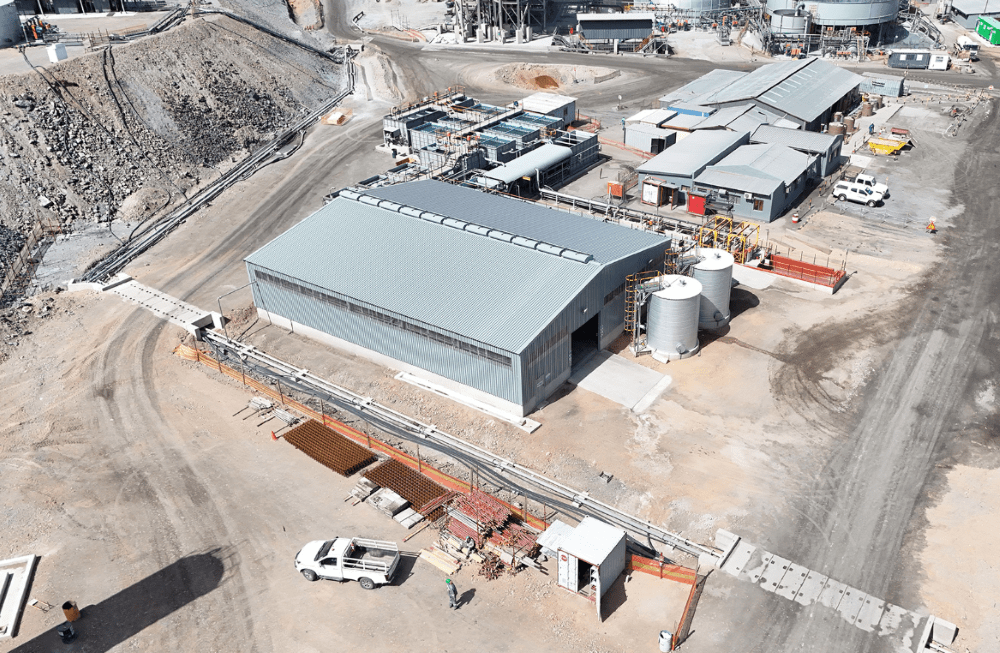
Rosh Pinah Zinc (RPZ) and Appian Capital Advisory Limited have successfully commissioned a new water treatment plant at the Rosh Pinah zinc-lead mine in south-western Namibia. The development marks a major environmental, social, and governance (ESG) milestone for the operation, securing critical water infrastructure as the RP2.0 expansion project nears its final stretch.
Designed to treat and recycle process water generated across RPZ’s operations, the newly commissioned facility will significantly curb the mine’s reliance on raw water abstraction from the Orange River—the primary freshwater source for both regional industry and local communities. By recycling process water at scale, the operation expects to drastically shrink its environmental footprint while insulating itself against regional water scarcity.
The announcement comes at a time when water stewardship is taking center stage across the sub-Saharan mining landscape, where climate variability increasingly threatens water security and operational continuity.
“Commissioning the water treatment plant is an important step in delivering on our environmental commitments as we scale the operation under RP2.0,” commented Ignacio Bustamante, Head of Base Metals at Appian. “Responsible water management is critical to both our operations and ESG standards. This milestone demonstrates our commitment to building a sustainable, long-term operation with a high standard of environmental stewardship.”
The water treatment plant is the latest in a string of recent infrastructure milestones at RPZ, following closely on the heels of the delivery of Namibia’s first paste backfill plant at the site.
The broader RP2.0 expansion programme is designed to increase the mine’s ore processing capacity from 0.7 million tonnes per annum (Mtpa) to 1.3 Mtpa, nearly doubling its zinc equivalent production. According to the partners, construction progress on the expansion has now surpassed 90% completion. The project remains firmly on schedule and on budget, with full completion slated for the end of 2026 and production ramp-up to follow shortly thereafter.
Through targeted infrastructure investments like the new treatment facility, RPZ aims to ensure that its transition to a higher-throughput production profile does not come at the expense of local ecosystem health or shared community resources.